Sunday, January 4, 2015

 
Welcome Back to School and the start of a New Year!
 
 
The class will start the new year with new units in language arts, math and science.


In reading students will learn about the genre characteristics and text structure of folktales. Before the class starts folktales students will review the genre of historical and realistic fiction. Knowing the genre and text structure of stories will aid reading comprehension. Students will also transfer their learning of summarizing nonfiction text to summarizing fictional stories. This new unit will focus on theme and lessons learned by the characters. The culmination of the unit will be a reader's theater which the class will perform for a younger audience. The purpose of this reader's theater is to ensure the students understand and project to the audience the lesson learned by the character.


In writing students will write a narrative piece in which they learned a lesson.  Students will use stories they read in class to help build the background knowledge for this writing performance task.


In math, students will study fractions. Students start with understanding a whole can be divided into equal parts. They will label the fraction parts of a rectangle and discuss the size of such fractions as l/2, l/4, l/8, l/3 and l/6. As they work on this unit they will understand the difference between the numerator and denominator in a fraction.
 
 
In science students will study the phases of the moon. They will learn that the moon has 8 phases - New Moon, Waxing Crescent, First Quarter, Waxing Gibbous,  Full Moon, Waning Gibbous, Last or Third Quarter, and Waning Crescent. Students will be responsible for keeping a moon journal for the month in order to understand these phases. Students will read and learn facts about the moon and compare it to the earth and sun. 


Students completed their Native American reports just before the holiday break.  Here is an example of the report  which a student wrote.
 
The Plains Native Americans
by Ashley


The Plains Native Americans inhabited a place in the United States called the Great Plains. The Great Plains is in the middle of our country. The Great Plains is west of the Mississippi River and east of the Rocky Mountains. It is north of Mexico and south of Canada. It is a very flat place with almost no trees. This information is about the Plains' location.


The men and women had many jobs. Hunting buffalo was a very important job for the Plains Indian men. The men were also great fighters. Another job was to guard their camp and to make sure other tribes were not going to attack them. Men also made tools like bows and arrows from bones, stone and wood. They taught their sons to hunt. The men had lots of jobs. The women did many jobs too. They tanned buffalo hides and cooked the food for the rest of the family. Another task was to collect berries, wild rice, and turnips. The women made the clothing out of hides. They had to tan the hides to make the clothing. The women taught their daughters to make clothes and cook dinner. The women were very important to their tribe.


Here are some of the foods of the Plains Indians. They ate meat from the buffalo. The meat that could not be eaten right away was made into jerky. Jerky was dried buffalo meat that had been pounded into a powder. Animal fat was added. Blood from the buffalo was put in a soup or made into pudding. The women collected berries and grapes to eat. The men hunted deer, elk, and moose. They also caught and ate little animals such as rabbits, gophers, and prairie chickens. The Plains had a bunch of food!


A tipi was a Plains Indian's home. Here are some facts about it. The women were in charge of the inside of the tipi. The men were in charge of the outside of the tipi. Inside the tipi there was a fire and a hole for smoke to get out. The men painted the outside of the tipi with good deeds they had done. The women got to put the tipi wherever they wanted because they were in charge of it. These are some facts about the Plains Indian homes.

Saturday, December 6, 2014

December News


Language Arts


Our class is learning about main idea and details as they study nonfiction. Students have had opportunities to read paragraphs and articles in which they must determine the main idea.  Moreover, students have learned that the main idea may be at the beginning of a paragraph, at the end, or it may be inferred.


Students are in the process of learning to take notes in order to write a research report on the Plains Native Americans.  With the background knowledge students have gained from reading nonfiction text, they will incorporate that along with their understanding of main idea and detail to read, take notes and write a report about the way of living, clothes, food, and people of the Plains.


Students are undertaking the concept of measurement and geometry in our next unit in math.  Students are learning about perimeter.  They have measured various objects in the classroom and will calculate the perimeter of the objects.


Students will follow this concept with learning about area.  Then students will determine how to calculate the area of a two dimensional shape.


Students are studying the Plains Native Americans in social studies.  They are learning about the location, way of living, food source, home and jobs of these people. 


Sunday, November 16, 2014

November News


In language arts the class has gravitated to the world of nonfiction. Their first stop on this journey is to learn nonfiction text features. When reading nonfiction, students must read with a different lens. First the context is more complex so reading rate must decrease. Students must pay attention to nonfiction features in a text because it offers students information to increase their understanding of a topic.


Students have been identifying various nonfiction text features and describing their purposes. This will enable students to understand information, concepts and ideas.  They will merge their understanding of what they read along with text and visual features.


Students have just completed a writing project in which they synthesized their learning of the Wampanoag Native Americans from the social studies' unit along with incorporating their learning about character traits and feelings from unit 1 in language arts.  Below are some examples of students' stories.


Wild Hunter
By Andrew

My name is Wild Hunter. I am called this because I always get food for the family. I am up at 3 a.m. in the morning hunter food for everyone in my family. I can see squirrels a mile away. I am not scared of much. I can be very quiet that helps me hunt animals. I also can shoot really accurate with my bow. This is why I am called Wild Hunter.

I am the child in the family. I am 14 years old and am very playful. My sister’s name is Running Deer and she is 13. She is a wonderful listener.  My dad’s name is Active Squirrel and he is a very good hunter. Lovely Rabbit is my mother and she is 33. She is a fantastic cook and good at making baskets and necklaces.  My aunt, Shining Moonlight, is 36. She is very smart. Last but not least is my uncle, Loud Wind, who is 40. He is skilled at fishing. These are the people in my family.

Here are some jobs I do. I help my dad shoot birds, deer, duck, elk and bear for my family so that we can eat. I also collect nuts and berries.  I did the test where I had to go into the woods for a week to prove I was a man. I go to the river bank and get clay for my mom. Then she can make pots to hold food. I help cut trees to make weapons. We also use the wood to build a house.  I fish at the lake and bring fish home for my mom to cook. These are my jobs.


                                               Kind Planter
                                               By Riley

My name is Kind Planter. I am called this because everybody thinks I am nice.  I love to plant and I am smart about what to plant. I am always calm.  I focus on whatever I need to do.  I help my family with their chores. I am always kind to other people. This is why I am called Kind Planter.

I am the mother of the family and I am 34 years old. My husband is 37. His name is Proud Shooter. He teaches our two sons Running Deer and Babbling Fish how to hunt and fish. Babbling Fish talks a lot and loves to fish. Running Deer is a fast runner. My husband’s brother lives with us. He is 40 and his name is Brave Hunter. He helps teach the children how to hunt and fish. My mother lives with us. Her name is Little Fox. She is 60. Little Fox helps me with the household chores. These are the people in my family.

I have many jobs. I plant crops like corn, beans, and squash. I fertilize and harvest them when they are ready to eat.  I also tan the animals’ hides and then use them to sew clothes for my family. I rub the brains from the animals on the skin to make it soft. I make pottery for cooking and storage. I get the clay from the river banks. I pinch the clay into the shape I want. I smoke and dry meat and vegetables to eat. I gather nuts, berries, and roots so my family can eat. I take care of the children and strap the baby on my back or hang it on a nearby tree as I work. These are my jobs as the mother in the family.


Math

In math students are learning about multiplication in our Groceries, Stamps and Measuring Strips' Unit. Students have had practice with repeated addition and skip counting. Now they will use that knowledge and apply it to a cityscape to determine how much taller the buildings and trees are than a boy in the picture. Students will use doubling and halving as an additional strategy to help them understand multiplication.


Sunday, October 26, 2014

October Ends


Language Arts


In the next language arts' unit, students will focus on reading nonfiction texts. Students will determine the main idea of a text and identify key details as they relate to the main idea. Students will also learn about text features and use these features to help understand nonfiction information.


Writing
Students have finished their personal narratives.  Below are two finished writing pieces.


My Roller Coaster Experience by Advaith


I jumped out of the car! I couldn't wait to get inside Six Flags! "Mom, dad, hurry up!" I said. "We're coming,"my mom said. Finally, everybody was ready including my friend, Ashish, who came with us. "Let's go," I said. When we walked into Six Flags, I noticed a roller coaster called Thunderbolt. It was huge. One drop was about 30-40 feet deep. Another was about 20 to 30 feet deep and that was right after a turn that almost turned you upside down. My mom and dad said I should go on it.  I was scared and I didn't want to.  But I didn't say that to my mom and dad. I didn't want them to know how I felt.  We kept on walking.  When it was time to go home we saw the Thunderbolt ride again.  My mom said we had time for one more ride. Anish said he wanted to go on the Thunderbolt.  I didn't want to say I was scared so I went with him.  My body was shaking.  My heart was pounding.  I was so frightened.  I felt like I was going to get a stomach ache.  I thought I was never going to feel good after this ride.  It was time to go on the ride.  I got in the coaster.  I had butterflies in my tummy and we hadn't even started the ride.  The attendant tightened my seatbelt.  Then the coaster started to move.  I opened my mouth to scream, but no voice came out.  The coaster went up, up and up. Then I saw the big drop which I was afraid of.  It was 30-40 feet deep.  Then the coaster went down. I was screaming.  But it wasn't a scream of fright.  It was a scream of happiness.  The ride went so fast and I had so much fun.  Then the ride ended.  When I got off the ride I told my mom and dad that it was so much fun.  We left Six Flags.  When we left, I asked my mom if we could come back another day.
My mom said, "Yes." I was so happy. I learned it is okay to be scared as long as you do the brave thing in the end.


Hockey Try-outs by Luke


Blink! Went the goal light. It was the final goal of the year for the Mite B Team.  My best friend, Max, asked me if I would try out for another team. It would give me an opportunity to be with my friends outside of school.  My parents drove me home and I put away my hockey stuff.  I asked my mom, "Can I go over to Brett's house?" She said, "Okay."  Brett is my friend.  I met him when I went to my first hockey practice.  I know him also because he is my neighbor.  Brett is 8 years old just like me.  I walked over to Brett's house. Brett answered the door when I rang the bell.  I asked Brett if he was going to try out.  He said, "Yes." We went on his trampoline and wrestled to get our bodies ready for hockey.  We did all types of different things. We rode our bikes and were running into each other with them so we would be tough. A person who plays hockey can't worry about getting hurt. Hockey is simple for me.  I enjoy it.  Hockey helps me with my anger issues.  It is important when you play a sport not to get angry if you lose. Twice a week we would train for try outs.  The day we tried out the helpers made us sprint across the ice.  My heart was beating fast.  It took a lot of energy to do it.  I was worried and thought am I good enough to make the team?  After that, the people made us pass and shoot which means the players go out to the center of the ice and someone passes the puck to you.  You shoot on the goalie.  I learned to believe in myself.  At first I didn't think I could make the team but after the tryouts were over I realized my hard training helped me be successful.

Mathematics


Students will be introduced to the concept of multiplication through word problems with equal grouping. After students use their background information to discuss things in their environment that come in groups, then students will identify how many groups as well as how many objects in a group to determine the product.


Monday, October 13, 2014

Week of October 13


Language Arts


Unit 1 is culminating in a series of tasks.  Students are responding in reading to questions related to the unit.  Students are learning about point of view.  As they read and listen to stories, students are enlightened as to the point of view of the narrator as well as the other characters.  Students are also expected to express their point of view with regard to the stories they are reading.  For instance, students listened to the story, My Rotten Red-Headed Older Brother, and were able to write a journal entry from both Richie's and Treesha's point of view.  Then students were asked to use their independent reading book to write a journal entry from the main character's perspective.


Students are also in the process of revising and editing their personal narratives.  Students have written about the challenges of sleeping over someone's house for the first time or making the hockey team and realizing that it takes determination and practice to be successful.  Stay tuned for student work in future blogs.  Here is an example of the type of personal narrative students could write.


Once I was at Buhr Pool. All of my friends went to the deep end, and I hadn't passed the test. I was so lonely! Although everyone was in the deep end, Leon, a nice 9-year-old boy, came out to play with me. We had a very good time…until he suggested that I do the deep-end test! A short while later, the deep-end test bell rang. I felt like I should cry like a baby but, luckily, didn’t. I hurried down to the deep end and made it just in time! I was at the lap lane and actually jumped in! I swam-crawled about 20 feet no problem, but I got jittery so it got harder. I didn’t know if I would make it. But…I saw that I was halfway! My head was underwater, and bubbles were escaping from my mouth. The water sparkled down there, and I knew that I would make it! And, when I started treading water, it was as good as over! Later, in the deep end (yes, I did make it), I was jumping in the pool, getting an average of 8-out-of-10 marks, and I thought no deep-end tests could face me.


Mathematics

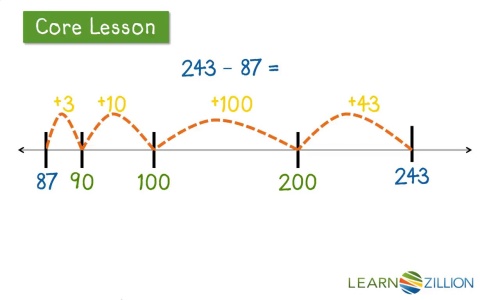
The class is currently in the midst of learning to subtract two and three digit numbers.  Students have been practicing this concept through using a number line within the scope of story problems.  Students are being encouraged to add up or count back on the number line.


Social Studies


Students currently are forming families in their groups and determining roles in their families as Wampanoag Native Americans.  Once they have defined their roles as a child, parent, grandparent, aunt or uncle, then they will choose a Native American name.  Upon completion of this task, students will read and research the role they would play in a Native American village.  They will determine the types of jobs they would have and the way of living of these people.  Once they have thoroughly researched this, they will write about a story about their role in the family as if they were that character.


"Reading is to the mind what exercise is to the body!"
http://www.lifehack.org/articles/lifestyle/10-benefits-reading-why-you-should-read-everyday.html