Sunday, January 24, 2016


Presently, the class is immersed in a unit on Folktales. This unit involves, first of all, understanding the genre characteristics.


As students are engaged in reading these stories, they will practice summarizing. The following graphic organizer has been introduced as one way to aid students with this skill.
 
SOMEONE (who is the main character?)
 
WANTED (what did the character want?)
 
BUT (what was the problem?)
 
SO (how did the character try to solve the problem?)
 
THEN (what was the resolution to the problem?)
 
 
Next students will explore the meaning of theme as they read.


The following are common themes students will explore in the stories they read:


After reading many books, students will undertake a writing project involving a lesson they learned. Below is a sample of student writing:
 
 
It was a sunny day and Mom and Dad were getting packed up for the fair. My brothers and my sister were excited about going to the fair. I was outside and helped my parents put snacks and drinks in the car.
When we got to the fair,Dad said stay with us. I said, “ Yes.’’ I smelled popcorn. I saw the water slides and a huge Ferris wheel. As I was walking around I went on one of the water slides. As I slid down the slide it was steep and I felt nervous because it looked so big from the top. Once I was at the bottom I was happy I did it. Then I asked for some popcorn. My dad bought a whole bag for us to share. It tasted buttery and salty at the same time. We ate it all in a few minutes. When the day was almost over I wanted to go on the carousel so badly. The carousel is my favorite ride because there are different animals to ride on. My favorite is the bear.
When my mother was looking I stole a ticket from Mom and Dad and ran to the carousel. I felt nervous because I was being sneaky and took something from my mom. I chose to ride the bear. As I rode the carousel I started to feel kind of sick because the carousel kept spinning and I felt dizzy. I got off and my family was gone. I felt scared because I didn’t know where they were.
 My mom was about to go looking for me,since she noticed I was missing. My mom said,” I know where he is! His favorite ride is the carousel I bet he’s there.”’My mom was worried until she spotted me on the bench next to the carousel. She ran super fast toward me.
 We were both happy and relieved to have found each other. I learned never to leave my parents when we were out and it is wrong to take something that doesn’t belong to you.


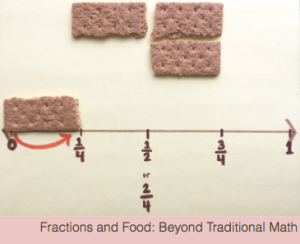
Students are studying fractions. First they are learning how a whole can be divided into various fractional parts. Then students will look at a number line as another method of understanding fractions.  They will compare these two concepts.


Then students will study fractions with a numerator greater than 1.
 
 
Next, students will use pattern blocks to find the fractional part of a set.


Students have been studying the moon. They have learned there are 8 phases in a lunar month. A lunar month is 29.5 days.


Stay tuned for the latest learning taking place in Room 17!    


The Phases of the Moon
More science games on Moon at NeoK12  

Sunday, November 22, 2015

November News


Language Arts
 
Students have been engaged in a unit which centers on nonfiction. First students learned about the various nonfiction features. They distinguished between visual and text features in nonfiction pieces.  The students discussed the importance of these features when reading informational text and how it helps them understand what they are reading. 


Some examples of visual features are the following:


Some examples of text features are shown below:


Once students developed a firm understanding of these nonfiction features, students have started to discuss how to find the main idea in a paragraph. They have learned main idea can be explicit and implicit and they must use all the details in a paragraph to determine the main idea.


Mathematics
 
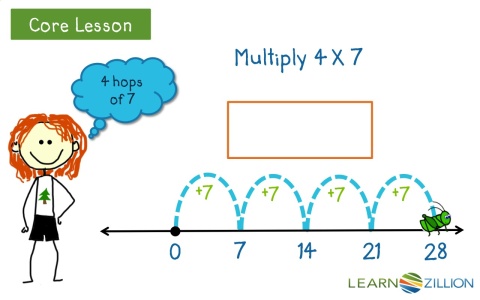
In math students have just completed the Grocery Stamp unit which introduces multiplication as repeated addition. Students used groupings of stamps to determine the total. They could skip count, used repeated addition or use multiplication to find their answer.


Below are samples of strategies that students used.


In addition to this, students used an open number line to determine the products of numbers on the number line by using doubling and tripling.


Social Studies
 
In social studies, students have learned a plethora of information about the Wampanoag Native Americans. Students have engaged in role playing which has enlightened them to understand the way of living of these people. They wrote stories about their Native American characters depicting their character's traits, their family, and their job in the family. The class also participated in discussing the pros and cons of Squanto helping the Pilgrims. They weighed their reasons and determined they should help the Pilgrims.


        Stay tuned for more learning!!!!

Sunday, October 25, 2015


October News


Language Arts
 
The students have learned that characters in a story have various character traits in addition to feelings. They were able to distinguish between a character's feelings and traits.
 
As students listened to read-alouds, they were able to determine a character trait which a character displayed and provided evidence from the story to support that trait.


Following this, students discussed how the character changed from the beginning to the end of the story. Then students applied this new found knowledge to stories they were reading in their small guided reading groups.
 
Once students had developed a firm understanding of these principles, students then discussed point of view in a story. They learned the difference between first and third person point of view.
After reading The Pain and The Great One, they were able to write a journal entry from each character's point of view.


Using the knowledge from the character unit, students wrote personal narratives incorporating these concepts into a writing piece. Below are a few samples of student's work.
 
                                  The Soccer Game
                                     By: Aashritha 
“You are goalie!” said my coach pointing to me. I knew I was in big trouble. I have never been goalie before! Before the game, I was nervous. So nervous that I was already sweating! My teeth were chattering. My legs were trembling. The next thing I knew, I was standing in front of the net. I was very unhappy about my position. Reason number one: it is the hardest position. Reason number two: I was a bad goalie. I felt like jumping in the air and flying off to Pluto until the Fall Soccer season was O-V-E-R. OVER!!!!! I guess I should have been paying attention to the game rather than daydreaming because then- THUD! The ball found my head, as usual! I could feel myself falling. It felt like slow motion. The last thing I saw was the ball racing toward me. Finally, I hit the ground. I laid there for a while. When I woke up, I heard my parents, my team, and my coach cheering for me. I did feel like I accomplished something, but I still didn’t know why they were cheering for me. “We won!” yelled one of my teammates. That’s when I realized: I did  accomplish something! I helped my team win! I felt warm on the inside but cold on the outside. I felt cold because it was a cold day! My coach, team, and parents were happy that we won the game. “You did a good job!” said my coach. I helped my team win by blocking the ball. I didn’t think I could do it but I did. I learned that you can do anything if you put your mind to it!
 
Personal Narrative
By Ethan
I was at an indoor archery place. My grandfather was taking me for a lesson. I was scared to go in. My grandfather said, “It was ok.” I was still scared. I thought to myself, “What if the instructor was mean?” I didn’t want to go but I did. The instructor was nice. He was easy to understand. I went to practice archery a lot. I felt comfortable because it was fun. I wanted to go every day but my grandfather said, “I wouldn’t be able to go every day.” He said, “You might be able to go Friday but not every day.” Then I stopped going. My dad said I couldn’t go for a while. I felt bored because archery was exciting. I said, “Dad, can you take me to archery?” He said, “Maybe.” Later that night my mom, dad and I went out to eat. I totally forgot I asked my dad to take me to archery. After we went to eat I thought we were going home. My mom and dad surprised me by taking me to the archery place. As we arrived I said, “Where are we?” They did not answer. Then I yelled, “Yah! Thank you so much.” My dad and I practiced shooting. I felt happy. My mom was bored sitting there. I felt bad for her. I asked, “Do you want to shoot?” She said, “No.” “Are you sure?” I asked, “It’s a lot of fun.” She said, “I am sure.” She did not want to. My dad was really good at archery. I decided to do archery because my dad did archery as a kid. Since it was only my third time I think I did good at it. As I continued to shoot my arm got tired. I started not to do good. The bow was heavy. My arm wasn’t as good because it was getting hard to hold the bow. We got there are 8 p.m. and now it was 9 p.m. We had been there a long time. I said to my dad, “My arm is getting tired.” Dad asked, “Do you want to go?” I said, “I did not want to go.” I am thrilled that my dad took me to the archery place. We did not go home. I said to my mom, “We can go home if you want to.” She said, “We can stay.” I shot some more. I was so excited because I hit the bullseye on the target. I was proud of myself. I forgot my arm was tired. My dad shot an arrow right next to mine. I said, “You almost split my arrow.” My dad answered, “Yes, I almost did.” Inside myself I said, “I did good when I shot.” I felt so proud of myself. I thought that was the best shot I ever did. My dad said, “What a good shot you made!” After we were done with that we went home. My mom and dad were proud of me for doing so good at archery. I was happy because I got to do something that my dad was good at and spent time with him.
 
Mathematics
Students have just completed their first unit in math. They practice adding and subtracting of three digits. They discussed strategies for solving word problems with three digits.  They learned to identify the important numbers and words in a problem as well as look at the question posed in the problem to determine what operation to use when solving the problem.  Strategies students used for addition involved number strings, breaking the number down into smaller parts and using a number line. For subtraction students used number lines as a way to solve problems.


Below is partial sums:                         
                          
Number Line
                        
Social Studies
After their field trip to Wood Memorial Library, students are undertaking their study of Wampanoag Native Americans. They have formed families and will determine their role in the family. Once they have established this, they will apply what they have read about the Wampanoag way of life to a writing piece. They will choose a Native American name and tell about their character trait. They will relate information about their family and how they survived.


Sunday, September 27, 2015

2015-2016 Room 17 Blog


Students are starting to settle into the routines and procedures of third grade.  The first month of school involved adjusting to a new classroom with new classmates.  The class discussed the four agreements and the importance of following them in order to develop a positive learning environment.


Language Arts
 
Students are undertaking the first Language Arts' unit.  This unit involves learning about characters' feelings, character traits, how a character changes, and a character's point of view.
 
Students are listening to stories in whole class lessons and discussing these concepts as well as reading books independently. Then the students are applying what they have learned in whole class lessons to their own texts. Each aspect of the character unit is introduced slowly. 
 
The class has learned that characters have various feelings. Students brainstormed a list of feeling words and, in addition, were introduced to new vocabulary feeling words. Below is a list of words they have discussed.


The students are reading closely to provide evidence to support the kinds of feelings a character has in the story.  As students read, they are learning to notice a character's actions and thoughts which prove how the character is feeling. Here is a video of the book, Lilly's Purple Plastic Purse by Kevin Henkes, that projects a character's feelings.


Students will transfer their learning about a character's feelings to write a personal narrative about an experience they had in which they had strong feelings. 
 
 
Here is a sample of a personal narrative entitled,
 
                      Keep an Eye on the Sky!


I was in gym class when my teacher suggested we go outside and play softball. As we made our way out to the field, my stomach slowly turned into a giant knot of fear. Softball is just not my game. I have a knack for always getting hit in the head by the ball. It doesn’t matter where I’m standing. The ball just seems to find me. My teammates gave me a glove and put me way out in left field. I didn’t complain. I just wanted to make sure I knew when gym class ended so I wouldn’t be left behind. Nothing happened the first three innings. Well, things happened but not in my little part of the softball field. I started daydreaming. The next thing I knew, I heard the sound of a ball whizzing through the air. I put up my glove to protect my head, and an amazing thing happened. I caught the ball in my glove! Not only did I catch the ball, but I helped my team to win. I was a hero to my classmates for the rest of the day. And I learned something. I may not always see the flying balls that come my way, but I can always take a chance and try to catch one.
 
As you can see the writer describes an experience that happened to him or her. The writer describes his or her feelings about the situation. The writer describes the events in the order in which they happened. The writer ends with how their experience impacted others as well as him or her.
 
Mathematics
 
Students started our first math unit which involves using a l,000 chart.  Students used their understanding of sticker notation to visualize making l,000 with sheets.  They realized there are l0 strips in a sheet which is equivalent to l00 and 10 sheets equal l,000. They were able to understand 34 (10s) equal 340.


                     There are 10 strips in one sheet and 100 stickers in a sheet.


From this point students decided to collect l,000 leaves.  Every day the students counted leaves they collected outside.  They grouped the leaves into piles of l0.  Then they counted by tens to figure out how many hundreds they had.  The students were given a l,000 number grid.  Each day the students added on their l,000 chart to figure out how far they were from l,000.


As students venture into third grade, their experiences and learning will be revealed on this blog!


Saturday, May 16, 2015

May News


Language Arts


                                                   Image result for poetry
 
Students will start this unit comparing and contrasting poetry with narrative and informational texts. Once students have discussed this, students will identify the characteristics of poetry.  Following this, students will distinguish that poems express feelings. Students will read many poems and identify the mood of the poems.
 
Baseball Stress
 
Oh, no!
I’m up at bat!
I think,
What if I get embarrassed!
Will I hit a grand slam?
 
The crowd is cheering,
It’s the end of the 9th inning,
What am I going to do?
There’s only 30 seconds left!
Here goes the pitch,
Now I feel persistent,
 
I hit the ball,
A grand slam!
 
I run like the wind,
I feel like the road runner.
 
The outfielders can’t find the ball.
We won!
13-10, Stars ahead by 3!
I did it!
The crowd comes on the field.
Now we’re off to
A victory party!
 
 
Shadows
 
Shadows
Shadows creeping
In my closet
Under my bed
Shadows watching…
Watching every move I make
Watching…
From behind the bookcase
And in the dusty dresser drawers
Shadows looking around the corner
Upon the stairway
Behind the rocking chair that creaks when it rocks
Shadows staring
Staring through me
From next to the sofa
And staring through the keyhole in the attic door
Shadows seeing
Seeing everything
Seeing that I am scared
Seeing that I hurry to get into the sunlight
Shadows following
Following me
Dancing up the walls
Chasing me across the ceiling
Never leaving…
Shadows.


Students will learn that a poem contains stanzas and lines rather than paragraphs and sentences.  Students will understand that the stanzas in a poem connect to one another.  Stanzas are sequenced and enhance the meaning of the poem.
 
 
Students will partake in writing a free verse poem after examining the components of a free verse poem. Then students will learn how to convert a narrative piece into a free verse poem.
 
I had to go the hospital in the middle of the night for them to check my breathing. I was so scared, and so was everyone else. But none of us said anything. We just sat there waiting for help. 
 
I had to go to the hospital                       Hospital
in the middle of the night                        at midnight
for them to check my breathing.           having breathing problems.
I was so scared,                                        Scared to death.
and so was everyone else.                       Everyone else too.
But none of us said anything.                 Silence!
We all sat waiting for help.                     Patience and helpless
 Students will then compose a shape poem.

Mathematics

The next math unit for the class is graphing and measurement.
Students will learn about pictographs and bar graphs. After they are presented with data, students will create their own graphs.


Science


Students will learn about the life cycle of the Brassica plant.  Students will learn the parts of a seed.  Then they will plant a seed and observe the changes which will take place over a period of six weeks. Students will illustrate, explain in writing, measure and graph the growth of their plant.


The class still has so much more learning to do!