Saturday, October 15, 2016

Welcome Back to the 2016-2017 School Year


Language Arts


                                  Image result for students reading books

Students will delve into a reading and writing unit in which they will explore the character's feelings and character traits.  Students will read various stories as a whole class.
Image result for The Honest to Goodness Truth

After reading students will brainstorm a list of feeling words.


Image result for feeling words for kids


Following this, students will explore the feelings of the characters in the stories they read and explain what evidence from the story supports the feelings they have chosen. After describing a character's feelings as a whole class, with a small group, and with a partner, students will apply this newly learned information to their guided reading group books. When they read in a small group, they will be expected to discuss and respond to questions related to the character's
feelings.
Image result for clementine book        Image result for judy moody    Image result for stink 

Furthermore, students will differentiate between character's feelings and a character's traits. Once they understand this, students will formulate a list of character traits.  Students will then review the stories read so far and choose a character trait for each character and provide examples from the story to support the character trait they chose.


Image result for character traits list                            Image result for character traits anchor chart

Writing               Image result for students writing clipart

The writing performance task for this unit involves students writing a personal narrative about a time they made a choice or decision and how it affected others. In order for students to be prepared for this, the class listens to and reads stories in which the character's have experiences which are relevant to the kind of personal narrative they will be writing.  Some stories the students have heard are:

Ira Says Goodbye     Image result for ira says goodbye


Ira Sleeps Over           Image result for ira sleeps over


 Too Many Tamales       Image result for too many tamales


  and The Honest to Goodness Truth.

Following this, students will explore some ideas for their writing topic. The class will brainstorm a list of their ideas in an effort to help inspire each other.  Then students will use a graphic organizer of their choice to outline the story they plan to write.  From this point, students will discuss the techniques of a strong lead or entertaining beginning.  Then students will start the writing process.  They will share their writing with each other and discuss ways to add more elaborative detail.  They will conference with each other as well as the teacher.


Mathematics


Students are learning to add and subtract three digit numbers.  They will use their understanding of place value to help them with their calculations.

When adding and subtracting, one strategy students use is a number line.

Image result for using a number line to add


Image result for using a number line to subtract


Another strategy students will employ is breaking the number apart.


                              Image result for breaking the number apart to add


Social Studies


Our class has started the Native American unit in which students will study about the Wampanoag Native Americans.  They will learn about their way of living, the foods they ate, the houses they lived in and how they used their environment to survive.


As part of this unit, students visit Wood Memorial Library on a field and have first hand experience on the tools the Native Americans made, the food they ate and the way they lived.


Image result for wood memorial library in south windsor, ct

Image result for wood memorial library in south windsor, ct


Monday, May 16, 2016


Language Arts


Students are in the process of learning the characteristics of poetry and the differences between poetry, narrative and expository writing.  Students will learn that poetry has stanzas and lines rather than paragraphs and sentences. Students carry over their understanding of main idea/theme into poetry. As students read poems they come to realize that poets use sequence just like writers do in their writing pieces. Students have the experience to read and discuss various poems.  They analyze what the poet is writing about and this leads to a discussion about literal and nonliteral meaning of words. After reading a story about Amelia Bedelia, students recognize that Amelia takes everything people say literally. From this point, students will explore similes, metaphors and personification in poems and analyze them.


The first poems students will write are free verse. Free verse poems are taught by having students write a short paragraph about a topic. Then they break it down by putting slash marks where they want to emphasize important points.  Next they write the short phrases in a tower format. After this, they choose only the most important words to create their free verse poem. Below are some examples of free verse poems from this class.

Snakes 
by Logan

Snakes SSS!
wiggles
coils
attacks its prey
squeezes
eats it whole
Rabbits
Frogs
and Eggs too
Squeeze!
Squeeze!
Gulp! Gone!


Dogs
by Cassie

Dogs
Fluffy and cute
But can't be mute
Bark like crazy
Pet them
Stop barking
Love dogs
How about you?

Fish
by Mason

Slimey fish
Hard to catch
Beta fish
Rainbow colored
Fun Pets

Then students wrote shape poems.  A shape poem is a poem written in the form of the topic. Below is an example of shape poem.


Next students learn to write a haiku.  A haiku is a Japanese poem which involves 5 lines. The first line has 5 syllables, the second has 7 syllables, and the last has 5 syllables. Below are some samples of students' work.


Summer
by Siri

      Yummy lemonade
Relaxing in the cool pool
      Going to the beach

Flowers
by Janani

   Different flowers
Roses, orchids, sunflowers
   Come at spring and go

Math

In math students are extending their understanding of addition and subtraction by combining numbers in the hundreds to the l,000. Students will be subtracting multiples of l00 and adding multiples of l0 and l00 to and subtracting them from 3 digit numbers. Students will be performing these operations within the context of word problems.  Students will continue to use number lines, pictures,  and the l00 grid to help visualize these operations.

                        
Students start with paper clip problems. The premise is that each box of paper clips contains l00 paper clips. Students are offered different scenarios involving problems with combining boxes of paper clips.

Science
Students are studying plants.  They learned the parts of a seed. They compare a dried bean seed and a seed soaked in water for 24 hours. Students are able to take the seed coat off the soaked seed and break it open to find the cotyledon and embryo. 


Then they experience planting a fast growing plant called a Brassica plant.  Students will observe the plant cycle of this plant. Students are illustrating, writing about what they noticed and measuring the growth of these plants.  Then they will make a bee stick and reenact the pollination process using the bee. 


Thursday, March 10, 2016

March News

In Language Arts students are reading nonfiction texts and discussing how to make inferences.  They have learned there is a formula they use in order to do this.
BK (background knowledge) + TC (text clues) = Inference
First students used this new information to make inferences about vocabulary in a nonfiction article. Then they used it when looking at headings and subheadings. Students learned the importance of being good reading detectives by making sure they had enough background knowledge before they could make an inference. Below is a youtube lesson on inferencing.
Students are also returning to the concepts of main idea and supporting details from an earlier unit in the year. When students read articles they are keeping in mind what the big idea is of a paragraph and of an article.  Also they are looking for clues from the important details in an article to determine the main idea.
                                    
In math students have just completed a unit on multiplication entitled Muffles Truffles.  Here is a short video describing the scenario that students started with before they undertook this unit.
Students will use doubling, halving, the commutative property of multiplication and the distributive property of multiplication throughout this unit. The problems become more complex as the unit evolves. Ask your child what they learned from this unit of study?
In social studies the students are learning about North American explorers.  At this point they have studied the Vikings.
                                  
                    
After students studied the Vikings they wrote an opinion essay entitled, Would you want to be a Viking? They used various sources to support their opinion. Below is a sample of a student's work.
                                                      Would you Want to be a Viking?
By Kyden

I would want to be a Viking. There were brave. The Vikings sailed across the sea and they did not know what was out in the unexplored places. They also fought in wars and could have died. Vikings hunted very large animals. Large Animals are deadly.
Another reason I would want to be a Viking is they were good sailors. The Vikings used birds to find land. If birds were flying a certain direction that means land is near. Vikings used the sun and stars to find their way around. Vikings also found Greenland, Iceland and Vinland. These lands were not discovered yet.
Another reason is Vikings were good with cooperation. Vikings worked together to build ships. If they did not work together the ships would be all messed up. When Vikings fought in wars they had to work together. If they didn’t, they would all be dead. Vikings hunted together. If they split up they would not catch an animals and have food. Then they would starve. That is why I would want to be a Viking.


Sunday, January 24, 2016


Presently, the class is immersed in a unit on Folktales. This unit involves, first of all, understanding the genre characteristics.


As students are engaged in reading these stories, they will practice summarizing. The following graphic organizer has been introduced as one way to aid students with this skill.
 
SOMEONE (who is the main character?)
 
WANTED (what did the character want?)
 
BUT (what was the problem?)
 
SO (how did the character try to solve the problem?)
 
THEN (what was the resolution to the problem?)
 
 
Next students will explore the meaning of theme as they read.


The following are common themes students will explore in the stories they read:


After reading many books, students will undertake a writing project involving a lesson they learned. Below is a sample of student writing:
 
 
It was a sunny day and Mom and Dad were getting packed up for the fair. My brothers and my sister were excited about going to the fair. I was outside and helped my parents put snacks and drinks in the car.
When we got to the fair,Dad said stay with us. I said, “ Yes.’’ I smelled popcorn. I saw the water slides and a huge Ferris wheel. As I was walking around I went on one of the water slides. As I slid down the slide it was steep and I felt nervous because it looked so big from the top. Once I was at the bottom I was happy I did it. Then I asked for some popcorn. My dad bought a whole bag for us to share. It tasted buttery and salty at the same time. We ate it all in a few minutes. When the day was almost over I wanted to go on the carousel so badly. The carousel is my favorite ride because there are different animals to ride on. My favorite is the bear.
When my mother was looking I stole a ticket from Mom and Dad and ran to the carousel. I felt nervous because I was being sneaky and took something from my mom. I chose to ride the bear. As I rode the carousel I started to feel kind of sick because the carousel kept spinning and I felt dizzy. I got off and my family was gone. I felt scared because I didn’t know where they were.
 My mom was about to go looking for me,since she noticed I was missing. My mom said,” I know where he is! His favorite ride is the carousel I bet he’s there.”’My mom was worried until she spotted me on the bench next to the carousel. She ran super fast toward me.
 We were both happy and relieved to have found each other. I learned never to leave my parents when we were out and it is wrong to take something that doesn’t belong to you.


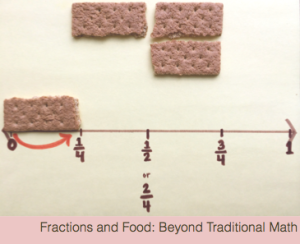
Students are studying fractions. First they are learning how a whole can be divided into various fractional parts. Then students will look at a number line as another method of understanding fractions.  They will compare these two concepts.


Then students will study fractions with a numerator greater than 1.
 
 
Next, students will use pattern blocks to find the fractional part of a set.


Students have been studying the moon. They have learned there are 8 phases in a lunar month. A lunar month is 29.5 days.


Stay tuned for the latest learning taking place in Room 17!    


The Phases of the Moon
More science games on Moon at NeoK12